
Wild Roses Don't Ask Permission to Bloom
On Thorns, Roses, and the Audacity to Keep Blooming
"What happened to you? You used to be so faithful."
The person who asked me that had grown up like a brother to me. Someone who had watched me at my most earnest, my most seeking, my most devout. And in that moment, with all of that history between us, he looked at who I had become and decided something must have gone wrong.
My heart broke in at least three directions at once: for the relationship, for the assumption that I had been acted upon rather than grown into myself, and for the way "faithful" was being wielded as a category I no longer belonged to.
But the part that stings the most, even now? My first instinct was to answer him. To justify. To compress years of experience, betrayal, reconciliation, wrestling, prayer, grief, and hard-won peace into something that would make sense to him. After all of that becoming, I still just wanted to be understood.
The Quiet Tyranny of Needing to Be Understood
That need is so human. So tender. So completely universal that even St. Francis named it in his famous Prayer for Peace, asking to be granted that he might "never seek so much to be consoled as to console, to be understood as to understand, to be loved as to love."
He didn't shame the need. He just pointed toward something greater on the other side of it.
Because the need to be understood, while profoundly human, becomes a kind of quiet tyranny when we let it govern our evolution. When we hold ourselves still so that others can keep up. When we soften our edges to remain legible to people who knew us in an earlier chapter. When we reach for the explanation instead of trusting the becoming.
It is one of the more invisible ways we abandon ourselves. And it costs more than we tend to calculate.
Faithfulness Looks Different From the Inside
Here is what I want to say to every woman who has ever been asked some version of "what happened to you" by someone who meant "why aren't you who I needed you to stay":
Evolving is not betrayal. It is, in fact, the most faithful thing you can do.
Faithful to what, exactly? To the soul that has been quietly insisting on its own truth. To the version of you that was always there underneath the performance, the compliance, the careful management of other people's comfort. To whatever you believe about why you're here and what you were made for.
Michelangelo said the sculpture is already complete within the marble block before the work begins. The artist simply chisels away the superfluous material to reveal what was always there. No one asks a sculptor to stop. No one demands that he justify removing a layer of stone. The revealing is the point.
We are no different. And what a disservice to the masterpiece within us when we apologize for what gradually, miraculously takes shape.
The Permission You Were Never Actually Waiting For
Here is something worth sitting with: whatever you believe happens when our time here is complete, one thing is almost certainly not on the agenda. You will not be asked to answer to a government, a church, a system, a man, or any structure that hoarded power during your earthly tenure.
Which means the permission you've been waiting for was always yours to give.
That's not a small thing. Giving yourself permission to evolve without external approval is an act of self-sovereignty. It's a claiming. It's a form of self-love that looks, from the outside, like stubbornness or straying or going quiet in rooms where you used to make noise. But from the inside, it feels like finally standing on ground that belongs to you.
And paradoxically, it is when we most fully inhabit who we are becoming that we are of the most luminous service to the people around us. The woman who has done the work of becoming does not show up performing. She shows up present. There is a difference, and people can feel it.
The Roses and the Thorns
I revisit that question now from a different place. I won't pretend it has no power. Some mornings it still feels like a thorn turning slowly in my chest.
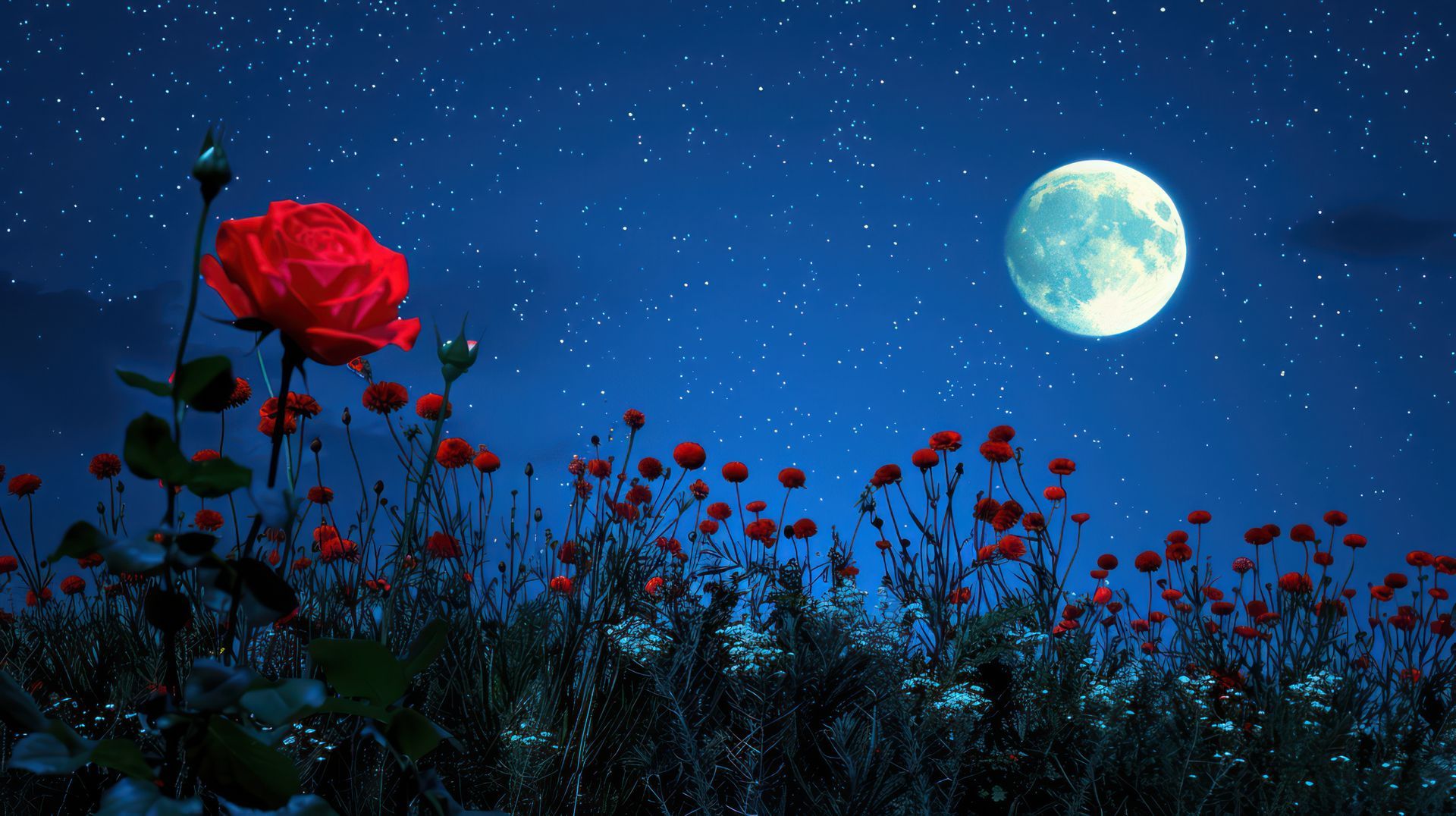
But these days, I am far more interested in cultivating the roses. Wild ones. Lush and unruly, flinging their fragrance toward the heavens with absolute abandon, unapologetic about how much space they take up. Because the heavens can take it. It is a benevolent sky that embraces this becoming of mine. A welcoming earth that holds me without question, that reminds me I belong here exactly as I am.
Be of good cheer, fellow traveler. You do, too.
If you're in the middle of your own becoming and you're tired of translating yourself for rooms that were built for a smaller version of you, I would love to be in conversation with you. This is exactly the work I do with women who are ready to stop self-censoring and start showing up fully. Let's talk.